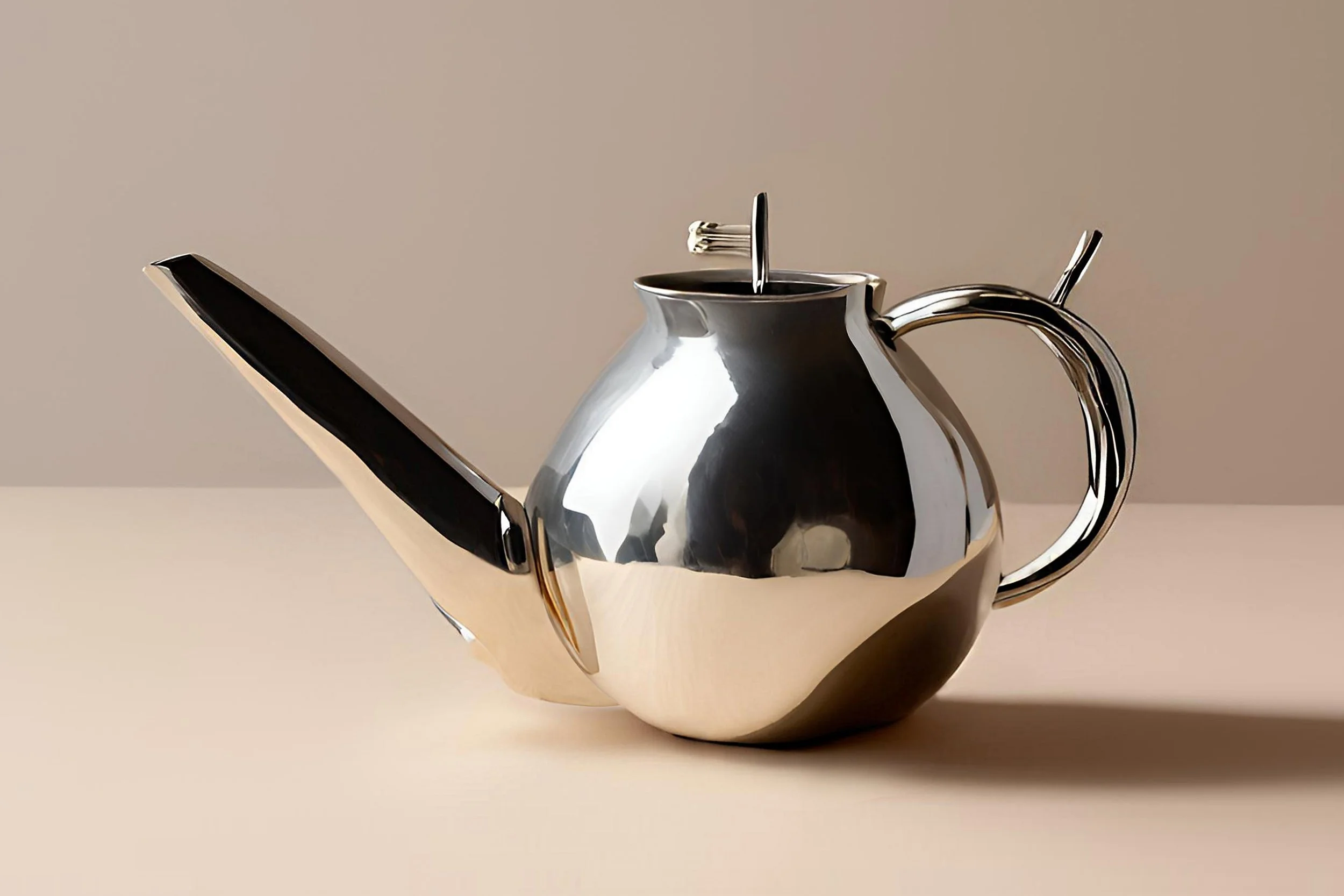
Metal Teapot Image Created with AI
AI Image Generation: Canva
Keyword Used: Utilitarian(실용적인), Functional(기능적인), Contemporary(동시대의), Tea pot(찻주전자), International(국제적인), Beyond genre(경계를 넘어), Craft(공예), Metalsmithing(금속공예), Good-looking(좋아보이는), Artistic(예술적인), Traditional(전통적인), Futuristic(미래지향적인), Trendy(트렌디한), Handmade(손으로 만든), Aura(아우라)
2024
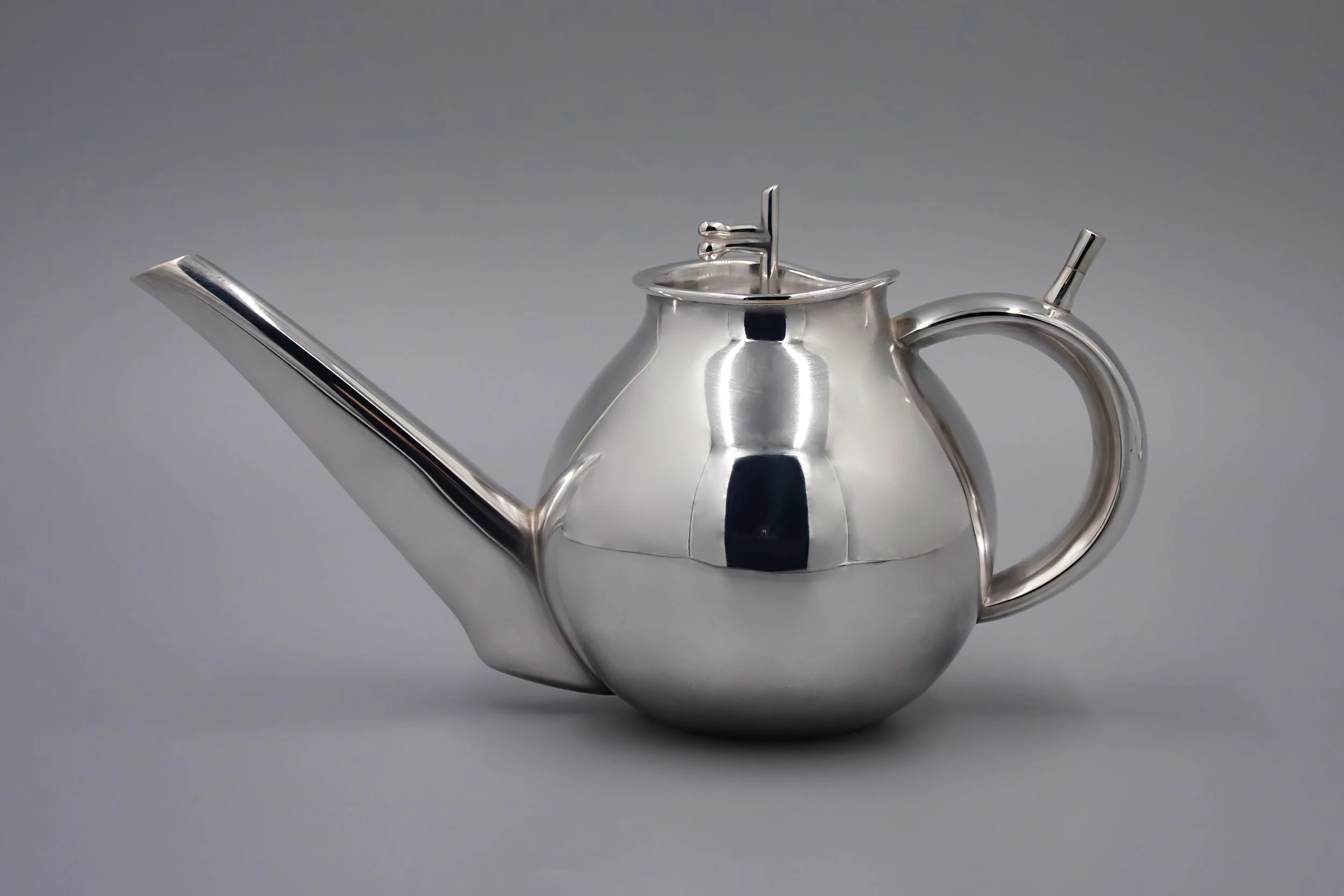
Physical Metal Teapot Based on the AI Image
Sheet of Brass, Silver Plated
Raising & Planishing
2” X 4.5” X 6” (50 X 115 X 160mm)
2024
A Metal Teapot Created Using AI
This work consists of an image created with generative AI and a metal teapot made from that image. At the time, AI and handcraft were often seen as opposing ideas, and many believed that craft was an area that AI could never replace. Rather than repeating this opposition, I wanted to explore how AI could be used as a tool within the process of making craft.
I began by collecting words that had often been used to describe “good craft” since I first started metalsmithing. I entered words such as utilitarian, functional, contemporary, traditional, futuristic, and handmade into the AI, along with the word “teapot.” I generated around 800 images, then selected one through an algorithm I developed and a long process of repeated revision.
The AI often produced forms that ignored function and structure, such as a teapot with two spouts or a handle suspended in midair. As a metalsmith who usually thinks first about the properties of metal and how an object can be made, I found these forms difficult to imagine on my own. I did not see these errors as flaws that needed to be removed. Instead, I accepted them as unfamiliar suggestions from the AI. Discovering these unexpected results was enjoyable, and I carried some of them into the physical teapot.
To turn the image on the screen into a real object, I had to reinterpret its ambiguous forms and unrealistic connections according to the structure and properties of metal. The AI created the image, and I translated it into an object that could be touched and used. The differences between the two results show both the errors made by the AI and the traces of my own decisions and craftsmanship.
At first, I worried that I would become a passive maker who simply followed the form suggested by the AI. However, every part of the process required my judgment, from entering instructions and selecting results to revising the image and making the physical object. Instead, I felt as though I were working with a highly capable assistant who constantly offered unexpected ideas. The process was both enjoyable and playful. The AI did not replace me as a craftsperson. It changed my role from a maker who creates everything alone into a director who selects, interprets, and coordinates the entire process.
AI를 활용하여 만든 금속 주전자
이 작업은 생성형 AI로 만든 이미지와 이를 실제 금속으로 제작한 주전자로 구성된다. 당시 AI와 수공예는 서로 대립하는 개념이며, 공예는 AI가 대신할 수 없는 영역이라는 인식이 강했다. 나는 이러한 대립에서 벗어나 AI가 공예의 제작 과정에서 어떤 도구가 될 수 있는지 직접 확인하고자 했다.
먼저 내가 금속공예를 시작한 이후 ‘좋은 공예’에 반복해서 붙어 온 말들을 모았다. 실용적, 기능적, 동시대적, 전통적, 미래지향적, 수공예적이라는 단어들을 ‘주전자’와 함께 AI에 입력했다. 약 800장의 이미지를 생성한 뒤 직접 만든 선별 알고리즘과 반복적인 수정을 거쳐 하나의 이미지를 선택했다.
AI가 만든 이미지에는 주둥이가 두 개 달려 있거나 손잡이가 허공에 매달려 있는 등 기능과 구조를 벗어난 형태가 자주 나타났다. 금속의 물성과 제작 가능성을 먼저 생각하는 나로서는 쉽게 떠올리기 어려운 모습이었다. 나는 이러한 오류를 제거해야 할 결함이 아니라 AI가 건네는 낯선 제안으로 받아들였다. 예상하지 못한 결과를 발견하는 과정은 유쾌했고, 그중 일부를 실제 주전자에도 그대로 옮겼다.
화면 속 이미지를 실물로 만드는 과정에서는 모호한 형태와 비현실적인 연결부를 금속의 구조와 물성에 맞게 다시 해석해야 했다. AI가 이미지를 만들었다면, 나는 그것을 손으로 만지고 사용할 수 있는 사물로 번역했다. 두 결과물 사이의 차이는 AI의 오류인 동시에 공예가의 판단과 손기술이 개입한 흔적이다.
처음에는 AI가 제시한 형태를 그대로 따라 만드는 수동적인 제작자가 될까 우려했다. 그러나 결과를 선별하고 수정하며 실물로 구현하는 모든 과정에는 나의 판단이 필요했다. 오히려 예상 밖의 형태를 끊임없이 제안하는 유능한 조수를 곁에 둔 듯 즐겁게 작업할 수 있었다. 이 작업에서 AI는 공예가를 대신하지 않았다. 대신 나는 혼자 모든 것을 만드는 제작자에서 선택하고 해석하며 전체 과정을 조율하는 디렉터가 되었다.